The Influence of Necromunda on Warhammer 40k
The Warhammer 40,000 universe is vast, complex, and endlessly fascinating, encompassing a grimdark galaxy torn apart by war, heresy, and survival. Yet hidden within this sprawling cosmos lies Necromunda—a hive world so iconic that it has not only shaped its own skirmish game but also left an indelible mark on the broader Warhammer 40k setting. While Warhammer 40k often focuses on galaxy-spanning conflicts and powerful armies, Necromunda zooms in on the desperate struggles of gangs fighting for survival in the endless industrial underbellies of a single planet. The relationship between Necromunda and Warhammer 40k is a story of mutual influence, rich world-building, and cross-pollination of design and narrative ideas. This article explores how Necromunda has influenced Warhammer 40k, from its lore and aesthetics to its gameplay and community spirit.
Origins: Necromunda’s Place in the Warhammer 40k Universe
Necromunda was first introduced as a setting in the late 1980s, with its own dedicated skirmish game launching in 1995. The game quickly developed a cult following, offering an experience distinct from the mass battles of Warhammer 40k. While Warhammer 40k showcases epic clashes between armies, Necromunda focuses on the gritty, day-to-day survival of ordinary people—or rather, extraordinary gangs—within the depths of a hive city.
Necromunda itself is a “hive world,” a type of planet crucial to the Imperium’s war machine. With a population estimated at over 100 billion, Necromunda’s cities are stacked kilometers high, creating a labyrinthine, layered society. The world supplies the Imperium with weapons, manpower, and manufactured goods, but its underhive is a place of lawlessness, where gangs battle for territory, resources, and survival.
.png)
From the start, Necromunda was woven deeply into the lore of Warhammer 40k. The planet’s role as a source of Astra Militarum (Imperial Guard) regiments, its fealty to the Imperium, and its reputation for violence and industrial decay made it a microcosm of 40k’s wider themes.
Lore: Depth, Diversity, and Human Struggles
One of Necromunda’s most lasting contributions to Warhammer 40k is its rich, down-to-earth storytelling. While the main Warhammer 40k narrative often follows superhuman Space Marines or galaxy-shattering events, Necromunda grounds the setting in the lives of ordinary (if extraordinary) humans. The gangs of Necromunda—Escher, Goliath, Orlock, Van Saar, Cawdor, and Delaque—each have unique cultures, rivalries, and motivations. This focus on human struggles in an inhuman universe adds vital texture to the overall lore.
For example, House Escher is matriarchal, known for their chemical expertise and deadly agility, while House Goliath is infamous for its brute strength and genetic tampering. House Delaque specializes in espionage, and House Cawdor is driven by religious fanaticism. These houses illustrate the diversity and adaptability of humanity in the 41st millennium—a theme that echoes throughout Warhammer 40k’s other Imperial factions.
Necromunda’s narrative also influenced the depiction of hive worlds and underhives across the Warhammer 40k setting. Novels, codices, and rulebooks often reference Necromunda or draw inspiration from its dangerous, claustrophobic environments. The planet’s infamous Spire, Underhive, and Sump have become archetypes for similar locations elsewhere in the Imperium. In fact, Dan Abnett’s Eisenhorn and Ravenor series frequently visit hive cities reminiscent of Necromunda, highlighting how its lore has permeated the greater 40k universe.
Visual Aesthetics: The Gritty Heart of 40k
Necromunda’s visual identity has had a significant impact on Warhammer 40k’s aesthetic evolution. The game’s art, miniatures, and terrain design emphasize a grim, industrial, and lived-in world. Necromunda’s hive cities are depicted as towering masses of metal and concrete, filled with rust, grime, and hazardous machinery. This urban decay is a stark contrast to the gothic cathedrals and open battlefields of traditional 40k, yet it’s become an integral part of the universe’s visual language.
The miniatures for Necromunda gangs are highly detailed, reflecting the individuality and customization that is central to the game. For example, each House has its own distinctive style: Escher models are lithe and flamboyant, Goliath models are hulking and brutal, while Delaque are enigmatic and shrouded in trench coats. These designs have influenced Warhammer 40k ranges, especially Astra Militarum and Genestealer Cults, with elements like respirators, cybernetics, and patchwork armor appearing in both lines.
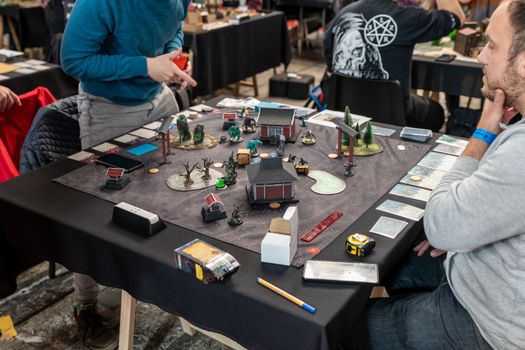
Perhaps most notably, Necromunda’s approach to terrain—dense, vertical, and modular—has inspired countless 40k tables. The popularity of industrial scenery, walkways, and multi-level battlefields owes much to Necromunda’s emphasis on fighting within the labyrinths of a hive city. As of 2023, Games Workshop has released over 50 different terrain kits for both Necromunda and 40k, many of which are cross-compatible and share the same industrial aesthetic.
Gameplay Innovations: From Skirmishes to Campaigns
Necromunda revolutionized how players experience the Warhammer 40k universe at the tabletop. While 40k focuses on large-scale battles, Necromunda is a skirmish game, typically involving 5-15 miniatures per side. This smaller scale allows for deeper narrative development, individual character progression, and a campaign system that tracks the fortunes (or misfortunes) of gang members over time.
Some of Necromunda’s key gameplay innovations that have influenced Warhammer 40k include:
- Campaign Play: Necromunda’s campaign system, where fighters gain experience, injuries, and equipment between games, has inspired similar mechanics in Warhammer 40k’s Crusade system. In fact, the Crusade rules introduced in 9th edition 40k (2020) draw heavily from Necromunda’s legacy, allowing players to develop armies and characters over the course of a narrative campaign. - Verticality and Terrain: Necromunda’s focus on multi-level, interactive terrain has pushed Warhammer 40k to embrace more complex battlefields. Modern 40k missions sometimes feature objectives and rules for vertical movement, reflecting Necromunda’s emphasis on three-dimensional play. - Individual Characterization: The detailed tracking of individual warriors in Necromunda has influenced special character and hero mechanics in 40k. Characters can now earn abilities, wounds, or reputations, making campaigns and narrative play more personal.The table below compares core gameplay aspects of Necromunda and Warhammer 40k, highlighting their differences and cross-influences:
| Aspect | Necromunda | Warhammer 40k |
|---|---|---|
| Game Scale | Skirmish (5-15 models) | Army-scale (20-200+ models) |
| Focus | Gangs, individual progression | Armies, strategic objectives |
| Campaign System | Integral and detailed | Optional (Crusade, inspired by Necromunda) |
| Terrain | Dense, vertical, interactive | Varied; increasingly vertical since 2018 |
| Characterization | Individual fighters with unique upgrades | HQ and Character units with abilities |
Community and Hobby Impact
Necromunda has also played a unique role in growing and shaping the Warhammer hobby community. Its model range encourages extensive conversion and personalization, as players create custom gang members and terrain to reflect their chosen House’s identity. According to a 2022 community survey by Goonhammer, over 60% of Necromunda players regularly kitbash or convert their miniatures—nearly double the rate reported by standard 40k players.
Narrative campaigns and story-driven play have become hallmarks of Necromunda leagues worldwide. Many gaming clubs run year-long Necromunda campaigns, with players chronicling the exploits of their gangs. This emphasis on narrative and hobby creativity has influenced 40k communities, where Crusade campaigns and themed events are increasingly popular.
The Necromunda influence is also felt in digital spaces. Video games like Necromunda: Underhive Wars (2020) and Necromunda: Hired Gun (2021) have introduced the setting to new audiences, blending 40k’s brutal sci-fi with cyberpunk themes. Content creators, podcasts, and YouTube channels dedicated to Necromunda often explore broader 40k topics, fostering a crossover of ideas, strategies, and enthusiasm.
Interconnected Factions and Crossover Events
Necromunda’s gangs and characters have found their way into mainstream 40k lore and even the tabletop game itself. Several Necromunda Houses have been referenced in Astra Militarum codices, and some characters have appeared as special miniatures or narrative hooks in 40k campaigns.
A notable example is the House Escher’s unique chem-weapons, which have influenced the design of the Death Guard faction’s plague weaponry. The Genestealer Cults, originally introduced in White Dwarf magazine as a Necromunda narrative threat, have since become a core 40k army. In fact, the first rules for Genestealer infiltration of hive cities appeared in Necromunda supplements, and the faction’s focus on industrial sabotage and insurrection echoes the underhive’s themes.
Cross-promotional events, such as global campaigns and narrative supplements, have further blurred the lines between Necromunda and 40k. In 2019, Games Workshop released the “Dark Uprising” box set, which included models and terrain usable in both games. This synergy strengthens the connection between the two games and encourages players to explore both skirmish and army-scale play.
Conclusion: Necromunda’s Enduring Legacy in Warhammer 40k
Necromunda is far more than a side-show within the Warhammer 40k universe. It has shaped the lore, aesthetics, gameplay, and community spirit of 40k in profound ways. From its grimy hive cities and diverse gangs to its campaign systems and narrative focus, Necromunda introduces a human element and narrative depth that enriches the larger setting. Its influence can be seen in the rise of narrative campaigns, the evolution of terrain design, and the enduring popularity of gritty, ground-level stories in the 41st millennium.
For fans and newcomers alike, exploring Necromunda is a journey into the dark heart of Warhammer 40k—a place where survival is a victory, and every gang member has a story worth telling.