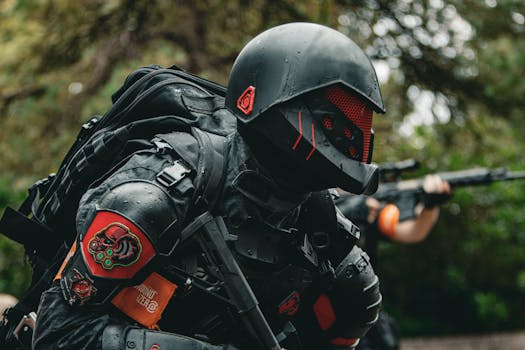
The universe of Warhammer 40,000 is a sprawling, grimdark tapestry, woven with the destinies of countless alien and human races vying for survival, supremacy, or annihilation in the 41st millennium. Each race is defined by its unique origins, abilities, and battlefield strategies, shaping both the legendary lore and the dynamic gameplay that have captivated fans for nearly four decades. Whether you’re a newcomer seeking a comprehensive understanding or a veteran looking to deepen your strategic insight, this guide is your ultimate resource for exploring every major Warhammer 40k race—unraveling their histories, powers, and the ways they wage war across the stars.
The Origins and Histories of Major Warhammer 40k Races
The Warhammer 40k setting is renowned for its dense lore, much of which is centered on the ancient conflicts and mythic backstories of its races. Understanding where each race comes from is key to appreciating their motivations and roles on the tabletop.
The Imperium of Man, humanity’s last bastion, was founded in the 30th millennium by the mysterious Emperor of Mankind. The Imperium faces constant threats from within and without, including the corrupting forces of Chaos, which emerged from the Immaterium—a parallel dimension of psychic energy.
.png)
The Aeldari (Eldar) are an ancient, once-great race whose civilization collapsed due to their own excesses, birthing the Chaos God Slaanesh and driving them to the brink of extinction. Their kin, the Drukhari (Dark Eldar), took refuge in the webway, embracing cruelty and piracy.
The Orks’ origins are genetically engineered, dating back millions of years to the “Brain Boyz” who created them as the ultimate warriors. Orks thrive on endless war, driven by an instinctive need to fight.
The Necrons, among the oldest races, were once flesh-and-blood beings known as the Necrontyr, who traded their souls for immortality and now rise from eons of slumber with technology that dwarfs all others.
The T’au are relative newcomers, emerging only in the last 6,000 years. Their philosophy of the “Greater Good” unites a multi-species empire, prioritizing technological advancement and tactical synergy.
Tyranids are extragalactic predators, invading the galaxy in all-consuming swarms. Their hive mind coordinates billions of organisms, each adapted for a specific role in the cycle of consumption and evolution.
This rich tapestry is further complicated by races like the Chaos Daemons, Genestealer Cults, and the mysterious Leagues of Votann. Each has a tale as complex as the galaxy itself.
Signature Abilities: What Sets Each Race Apart
Every Warhammer 40k race boasts unique abilities and playstyles that reflect their lore and biology. These traits impact both the tabletop and the broader narrative.
The Imperium’s greatest strength lies in its vast resources and diversity. Space Marines are genetically enhanced super-soldiers, wielding advanced armor and weaponry; the Astra Militarum (Imperial Guard) brings overwhelming numbers and artillery; the Adeptus Mechanicus fields powerful war machines and manipulates technology.
Aeldari armies employ speed and psychic mastery, using advanced vehicles, Warp manipulation, and specialist units. Their psychic powers are among the most potent, allowing them to bend fate itself.
Orks are defined by unpredictable aggression. Their “Waaagh!” energy makes them stronger in large numbers, and their belief-driven technology often works purely because they think it should—leading to bizarre, jury-rigged weapons that defy logic.
Necrons are nearly immortal, thanks to their living metal bodies and the ability to self-repair. Their armies field devastating gauss weaponry and teleportation technology, and their leadership units can resurrect fallen warriors.
T’au rely on advanced ranged firepower, drone support, and coordinated tactics. Their “For the Greater Good” rule allows them to support each other with overlapping fields of fire and defensive maneuvers.
Tyranids are masters of biological adaptation. Their synapse creatures coordinate swarms, while bio-engineered monsters devastate enemy lines. They can regenerate wounds, spawn reinforcements, and evolve new traits between battles.
Strategic Approaches: Battlefield Tactics by Race
To succeed in Warhammer 40k, players must harness the strengths of their chosen faction while mitigating their weaknesses. Here’s how the main races approach strategy:
Imperium armies offer flexibility: Space Marines excel at rapid assault and adaptable responses, while the Astra Militarum relies on layered defenses and massed firepower. Coordinated synergy between different Imperial factions can yield devastating results.
Aeldari armies rely on speed and finesse. Their units strike hard and fast but are fragile, demanding careful positioning and the use of psychic powers to control the flow of battle.
Orks win through brute force and momentum. Their armies overwhelm opponents with sheer numbers and relentless charges. The random effects of Ork technology can swing battles unexpectedly, rewarding creative play.
Necrons favor durability and board control. Their self-repair capabilities make them tough to dislodge, and their teleportation allows for sudden, unexpected attacks behind enemy lines.
T’au focus on ranged dominance. Their forces excel at maintaining distance, using drones to absorb incoming fire and carefully orchestrated shooting phases to eliminate threats before they can get close.
Tyranids thrive in close combat and swarm tactics. By saturating the battlefield with numerous bioforms and coordinating their assaults through synaptic links, they can overrun even heavily fortified positions.
Comparative Overview: Warhammer 40k Races at a Glance
To help you visualize the distinct strengths and styles of each major race, here’s a comparative table summarizing their key traits:
| Race | Origin | Signature Ability | Primary Tactic | Notable Weakness |
|---|---|---|---|---|
| Imperium (Space Marines, Guard, etc.) | Human, 30th Millennium | Diversity, resilience | Balanced, flexible | Internal division |
| Aeldari (Eldar, Drukhari) | Ancient, pre-human | Psychic mastery, speed | Hit-and-run, finesse | Fragility |
| Orks | Engineered warrior race | Waaagh! energy, numbers | Brute force, swarming | Lack of discipline |
| Necrons | Necrontyr, millions of years old | Self-repair, immortality | Durability, teleportation | Low psychic defense |
| T’au | Younger race, 6,000 years old | Advanced tech, synergy | Ranged firepower | Weak in melee |
| Tyranids | Extragalactic invaders | Biological adaptation | Swarm, close combat | Reliant on synapse |
Minor Factions and Xenos: Unsung Forces of the 41st Millennium
Beyond the headline races, Warhammer 40k’s galaxy is teeming with minor factions that add further depth and variety.
The Genestealer Cults infiltrate human worlds, undermining them from within and paving the way for Tyranid invasions. The Leagues of Votann, also known as the Kin or “Squats,” are hardy miners and traders with advanced technology, recently reintroduced to the game in 2022. The Chaos Daemons, manifestations of the Warp’s dark gods, bring reality-warping powers and unpredictable threats to the battlefield.
Other xenos races like the Kroot, Hrud, and Rak’gol have less tabletop presence but contribute to the setting’s diversity. Even in the shadows, these lesser-known factions can be pivotal, introducing unique mechanics or acting as wildcards in campaigns and narrative play.
Choosing a Race: Factors to Consider for New Players
Selecting a Warhammer 40k race is a major decision for new players, shaping not only your collection but your entire experience with the hobby. Here are some important factors to consider:
1. Playstyle Preferences: If you like direct assaults and overwhelming force, Orks or Tyranids might appeal. For tactical shooting, T’au are a strong choice. Fans of psychic powers may prefer the Aeldari or Chaos factions. 2. Model Aesthetics: Warhammer 40k is as much about modeling as gaming. Some players are drawn to the gothic armor of Space Marines, the insectoid forms of Tyranids, or the enigmatic style of Necrons. 3. Narrative Appeal: The deep lore of each race can be a deciding factor. The tragedy of the Aeldari, the religious zeal of the Imperium, or the anarchic fun of Orks provide rich narrative hooks. 4. Community and Support: Some factions have more support, both in terms of available models and community resources. As of 2024, the Imperium and Space Marines make up over 35% of army lists at major tournaments, reflecting their popularity and extensive model range. 5. Complexity: Certain races, like the Aeldari or Genestealer Cults, have more complex rules or require precise play to succeed. Others, like Space Marines, are more forgiving for beginners.By weighing these factors, new players can find the army that best suits their gaming style, hobby interests, and narrative preferences.
Warhammer 40k Races and the Evolving Meta
The balance of power among Warhammer 40k races is constantly in flux, driven by new releases, rules updates, and evolving strategies. In 2023, for example, the introduction of the Leagues of Votann shook up the meta with their durable troops and powerful ranged weapons. Meanwhile, the latest Codex releases for Tyranids and Necrons have brought long-overdue buffs, making them more competitive at both casual and tournament play.
Statistically, Space Marines remain the most popular faction, appearing in approximately 30% of all games tracked by the ITC (Independent Tournament Circuit) in 2023. T’au and Tyranids have seen rising win rates, often exceeding 55% at major events due to recent updates.
Adapting to the meta means understanding not just your chosen race, but also their natural predators and prey. For example, T’au armies often struggle against fast melee factions like Orks or Tyranids but excel at dismantling slow, durable forces such as Necrons.
Staying current with rules changes, new model releases, and tournament statistics is essential for any player aiming to master the strategic landscape of Warhammer 40k.
Final Thoughts: The Enduring Appeal of Warhammer 40k Races
The enduring popularity of Warhammer 40k owes much to the diversity and depth of its races. From the tragic grandeur of the Aeldari to the relentless hunger of the Tyranids, each faction offers a distinct way to experience the universe’s endless war—both in narrative and on the tabletop. Whether you’re drawn by lore, strategy, or the challenge of painting an army, there’s a Warhammer 40k race to ignite your imagination and test your tactical skills.
As Games Workshop continues to expand the setting with new factions, stories, and models, the galaxy of the 41st millennium remains as thrilling and unpredictable as ever. Whichever side you choose, you’re joining a legacy of epic battles, heroic deeds, and unforgettable characters.